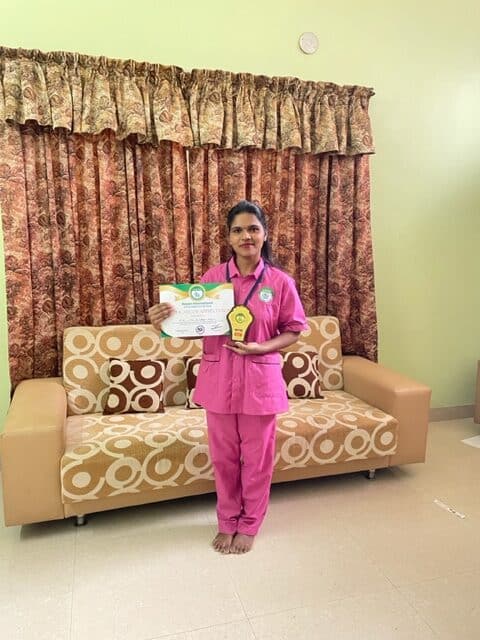
Our nurses follow a 2-hour repositioning schedule to prevent pressure sores, manage catheters and feeding tubes, administer medication on time, and check vitals through the day and night. Whether the patient is recovering from a stroke, living with a spinal cord injury, or needs long-term palliative support, we match the nurse's qualification to the clinical need and coordinate equipment separately. Families in the district can also see our home nursing services in Udupi hub page for the full range of care options.
Types of Bedridden Conditions We Manage
The condition behind the immobility decides the care plan, the nurse's qualification, and the equipment required. Not every bedridden patient needs the same level of clinical support:
Post-stroke paralysis: Hemiplegia or quadriplegia after a stroke calls for repositioning, range-of-motion exercises, speech therapy coordination, and fall prevention. Most patients need a GNM nurse for the first 3 to 6 months, moving to a caretaker once the condition is stable. See our dedicated page: Stroke Care at Home in Udupi.
Spinal cord injury: Paraplegia or quadriplegia after an accident or surgery needs specific positioning, bladder management (usually a Foley catheter or intermittent catheterisation), bowel management, and close skin monitoring. A BSc nurse is generally required for the first 2 to 3 months, after which a GNM nurse can take over. For patients who also need ventilator support, see: ICU Care at Home in Udupi.
Advanced dementia: Patients with late-stage dementia who have lost mobility need feeding support (often through a Ryles tube), incontinence management, and gentle repositioning. A caretaker trained in dementia support can manage day-to-day needs, with a GNM nurse visiting periodically for clinical review.
Post-surgical immobility: After hip replacement, spinal surgery, cardiac surgery, or major abdominal surgery, a patient may be bedridden for 2 to 8 weeks. The main needs are wound dressing, drain management, injections, and gradual mobilisation. A GNM nurse is the standard qualification for this stage.
Terminal illness (palliative): Cancer, end-stage organ failure, or advanced neurological disease can lead to permanent bed rest. Palliative bedridden care is about pain control, comfort, and dignity rather than recovery. A caretaker manages oral medication routines; injectable pain relief needs a GNM or BSc nurse.
Chronic respiratory failure: Patients on home ventilators or continuous oxygen after an ICU discharge need a BSc nurse for monitoring, suctioning, and emergency response. This is the highest-acuity category of bedridden care and requires 24-hour nursing without exception.
Get Free Home Assessment
Book Now
Daily Care Protocol for Bedridden Patients
Our nurses follow a written daily protocol for each bedridden patient, set after the initial home assessment and based on the patient's Braden Scale score, existing wounds, catheter status, and nutritional needs.
Repositioning Schedule (Every 2 Hours)
Pressure sores are the biggest risk for a bedridden patient. Our nurses follow a 2-hour turning schedule, moving between supine, left lateral, right lateral, and semi-prone positions. Every position change is logged on a turning chart with the time, position, and a skin check. Patients with an existing pressure sore are turned every 1 to 1.5 hours, and the wound is dressed per the treating doctor's instructions.
Braden Scale assessment: On day one, the nurse assesses the patient's Braden Scale score, which rates six factors (sensory perception, moisture, activity, mobility, nutrition, and friction or shear) on a scale of 6 to 23. A score below 18 signals pressure sore risk, below 12 is high risk, and below 9 is very high risk. This score sets the repositioning frequency, mattress type, and skin care routine, and it is reassessed weekly.
Hygiene and Skin Care
A full bed bath is given daily with mild soap and lukewarm water. The perineal area is cleaned after every incontinence episode. Skin folds are kept dry and checked for fungal infection. Moisturiser is applied where needed, but not on areas that press against the mattress, since moisture there increases friction. Oral care is done twice a day, and hair is washed in bed using a rinse-free method, usually twice a week.
Catheter and Tube Management
For a patient with a Foley catheter, the nurse tracks urine output each shift, checks the insertion site for infection, cleans the catheter junction daily, and changes the catheter on the doctor's schedule (typically every 2 to 4 weeks). For Ryles tube feeding, the nurse confirms tube placement before every feed, gives the prescribed volume at the correct rate, flushes with water afterward, and watches for signs of aspiration. Suprapubic catheters, PEG tubes, and colostomy bags are handled by GNM or BSc nurses following the treating hospital's protocol.
Nutrition and Hydration
Bedridden patients are prone to malnutrition and dehydration. The nurse tracks daily fluid intake (target 1.5 to 2 litres unless the patient is fluid-restricted), follows the prescribed diet (high protein for wound healing, fibre for bowel regularity), and records weight weekly where possible. For tube-fed patients, feed composition, volume, and timing are logged and shared with the treating doctor or dietician on request.
Range-of-Motion Exercises
Even a patient who cannot move on their own benefits from passive range-of-motion exercises, which reduce joint stiffness, support circulation, and lower the risk of deep vein thrombosis. Our nurses do gentle limb exercises 2 to 3 times a day, moving each joint through its full range. Where a physiotherapist is involved, the nurse assists during sessions and continues the prescribed movements in between.
Vitals Monitoring
Blood pressure, pulse, temperature, and oxygen saturation are checked at the start and end of every shift, and every 4 hours for high-acuity patients. Blood sugar is monitored where prescribed. All readings go into a daily report that the family and doctor can review at any point.
Qualification Tiers – Who Should Care for Your Patient
Matching the qualification to the patient's needs is a clinical call, not a cost call. A caretaker looking after a patient who needs wound dressing or catheter changes puts the patient at risk. Here is how the tiers break down:
| Qualification |
Can Do |
Cannot Do |
Right For |
| Caretaker |
Repositioning, bed bath, feeding (oral/tube), companionship, mobility support, vital signs (BP, temp, SpO2) |
Wound dressing, injections, catheter changes, IV line management |
Stable elderly bedridden, late-stage dementia, palliative (oral meds only) |
| GNM Nurse |
Everything a caretaker does + wound dressing, catheter insertion/change, injections (IM/SC), Ryles tube insertion, medication via tube, drain management |
Ventilator management, central line care, complex ICU protocols |
Post-surgical bedridden, stroke with wounds/tubes, pressure sore management, catheter-dependent patients |
| BSc Nurse |
Everything a GNM does + ventilator monitoring, tracheostomy care, central line management, IV infusion, advanced wound care (VAC therapy assistance) |
Doctor-level decisions (these are escalated to the treating physician) |
Post-ICU bedridden, ventilator-dependent, tracheostomy, multi-organ monitoring |
For a fuller comparison covering training duration, registration, and scope of practice, see: Caretaker vs Nurse – Qualification, Cost & When You Need Which.
Our recommendation process: During the free home assessment, our coordinator reviews the patient's condition and recommends a qualification tier. If a caretaker is enough, we say so. If a GNM or BSc nurse is needed, we explain the reason, and the treating doctor's discharge summary usually confirms it.
Equipment for Bedridden Care at Home
The right equipment cuts down on complications and makes nursing tasks easier for both the nurse and the patient.
| Equipment | Why It Is Needed |
|---|
| Air mattress / alternating pressure mattress | Prevents pressure sores by shifting pressure points every few minutes. Needed for any patient who cannot reposition independently. |
| Hospital bed with side rails | Adjustable head and foot elevation, side rails for fall prevention, and easier access for repositioning and dressing changes. |
| Suction machine | Clears oral or tracheal secretions for patients with swallowing difficulty, a tracheostomy, or excess secretions. |
| Oxygen concentrator | Supplies additional oxygen for patients with respiratory conditions. 5L or 10L depending on the prescription. |
| Pulse oximeter | Spot-check or continuous SpO2 and heart rate monitoring. |
| BP monitor (digital) | Routine blood pressure checks, especially important for stroke and cardiac patients. |
| Positioning wedges and pillows | Support correct body alignment during repositioning and reduce shear forces on the skin. |
We coordinate equipment rental from suppliers serving Udupi and Manipal. Equipment is delivered to your home, set up, and the nurse is briefed on its use, so you do not need to source it separately. Tell us what the treating doctor has prescribed and we take it from there. See our equipment guide: Home Care Medical Equipment.
Bedridden Patient Care Pricing – Udupi
Equipment rental, medical consumables (gloves, dressings, catheters), and medicines are quoted separately based on what the patient needs.
These are starting prices for nursing and caretaker care in Udupi. The final rate depends on the patient's condition, the care needed and the hours required.
| Care setting | Starting price |
|---|
| Care at home | ₹900 – ₹1,200 per day (24 hours) |
| Care in hospital | ₹1,300 – ₹1,700 per day (24 hours) |
| Monthly care | From ₹28,000 onwards |
The coordinator confirms the exact figure in writing after the free home assessment. See the home nurse cost page for how the rate is set.
Bedridden care is priced above general elderly care at the same qualification level because of the higher clinical intensity involved: frequent repositioning, wound care, tube management, and documentation. Call +91 73495 13467 for a quote based on your patient's condition.
Typical Monthly Cost by Condition
| Condition | Qualification Needed | Shift |
|---|
| Stable elderly (bedridden) | Caretaker | 24hr |
| Post-stroke with catheter | GNM | 24hr |
| Post-surgical (6-week recovery) | GNM | 12hr |
| Ventilator / post-ICU | BSc | 24hr |
For a full comparison of home nursing against a prolonged hospital stay, see: Home Nursing vs Hospital Care – Cost, Safety & Recovery Compared.
Warning Signs That Need Hospital Transfer
Our nurses are trained to spot when a bedridden patient's condition has moved beyond what can be managed at home. The following signs trigger an immediate call to the treating doctor and, if advised, transfer to the nearest hospital:
Respiratory distress: Oxygen saturation dropping below 90% despite supplemental oxygen, sudden breathlessness, blue discolouration of the lips or fingertips, or gasping. For a patient on a ventilator, any alarm that does not clear with standard troubleshooting is escalated at once.
Fever unresponsive to medication: Temperature above 101°F (38.3°C) that does not settle within 2 hours of paracetamol. Persistent fever in a bedridden patient can point to a urinary tract infection (common with catheters), pneumonia, or an infected pressure sore.
Sudden neurological changes: New confusion, sudden unresponsiveness, seizures, pupil changes, or loss of consciousness. In stroke patients, any new weakness or speech difficulty suggests a recurrent event needing emergency care.
Severe pressure sore deterioration: A stage 3 sore (full-thickness skin loss exposing fat) or stage 4 (exposing bone, tendon, or muscle) with foul-smelling discharge, spreading redness, or signs of sepsis. Stage 1 and 2 sores are managed at home; stage 3 and 4 may require surgical debridement.
Gastrointestinal emergencies: Blood in vomit or stool, severe abdominal distension, no stool passed for more than 5 days despite laxatives, or vomiting that prevents oral medication.
Urinary complications: No urine output for more than 8 hours despite adequate fluids, blood in the urine, or catheter blockage that does not clear with flushing.
Our emergency protocol: the nurse calls the treating doctor, notes down the clinical observations, prepares the patient's medication list and recent vitals log, and arranges ambulance transfer if advised. Where possible, we coordinate admission to the same hospital that treated the patient before, so the medical team already has the history on file.
Udupi Areas We Cover
We provide bedridden patient care across Udupi town and the neighbouring areas. Our office at Kunjibettu coordinates nurse deployment through the district. Areas we currently serve:
Central Udupi: Kunjibettu, Court, Bunder, Diana Circle, Ambalpady, Kadiyali, Indrali, near the Service Bus Stand.
Manipal and adjoining areas: Manipal, Tiger Circle, End Point, Kalsanka, and the localities close to Kasturba Medical College (KMC) Manipal, where patients are often discharged and referred to us directly.
Coastal and nearby towns: Malpe, Kaup, Kallianpur, Santhekatte, Parkala, Katapady, and Brahmavar. For addresses further out, we confirm nurse availability before booking.
Hospitals we coordinate with: Our nurses are familiar with post-discharge protocols from Kasturba Medical College (KMC) Hospital Manipal, Manipal Hospital Udupi, Adarsha Hospital, and City Hospital Udupi. If your family member is due for discharge and will need bedridden care at home, call us before the discharge date so we can plan the transition: +91 73495 13467.
Frequently Asked Questions
What is included in bedridden patient care at home in Udupi?
Bedridden patient care at home in Udupi covers repositioning every 2 hours to prevent pressure sores, daily bed bath and hygiene, catheter and feeding tube management, medication administration, vital sign checks, passive range-of-motion exercises, and nutrition tracking. The exact plan is set after a home assessment based on the patient's condition and existing wounds.
How much does bedridden patient care cost in Udupi?
Care at home in Udupi starts from ₹900 to ₹1,200 per day (24 hours) and care in hospital from ₹1,300 to ₹1,700 per day. Monthly care starts from ₹28,000 onwards. The final rate depends on the patient's condition, and the coordinator confirms it in writing after the free home assessment.
Should I hire a caretaker or a trained nurse for a bedridden family member?
A caretaker is suitable for stable bedridden patients who need repositioning, hygiene support, feeding, and companionship. A GNM nurse is required once the patient has a wound that needs dressing, a catheter that needs management, or a prescription requiring injections. A BSc nurse is needed for patients with a tracheostomy, ventilator support, or multiple systems that need monitoring. See: Caretaker vs Nurse Difference.
How often does a bedridden patient need to be repositioned?
Every 2 hours as a rule, alternating between supine, left lateral, right lateral, and semi-prone positions based on what the patient can tolerate. Our nurses log each turn on a written chart with the time, position, and a quick skin check. Patients who already have a pressure sore are turned every 1 to 1.5 hours.
What equipment do I need for bedridden care at home in Udupi?
Patients with breathing difficulty may also need an oxygen concentrator or a suction machine. We arrange delivery and setup through equipment suppliers serving Udupi and Manipal.
Can your nurses manage a catheter or feeding tube at home?
Yes. Our GNM and BSc nurses manage Foley catheters, suprapubic catheters, Ryles tube feeding, PEG tube feeding, and colostomy bags in the home. Catheters are changed on schedule, urine output is tracked every shift, and feed volumes are recorded so the treating doctor has an accurate intake and output history.
Do you cover Manipal and areas near Udupi for bedridden care?
Yes. From our Kunjibettu office we place nurses across Udupi town and the surrounding stretch that includes Manipal, Malpe, Kaup, Kallianpur, Brahmavar, Katapady, Parkala, and Santhekatte. For addresses further out, we confirm nurse availability at the time of booking.
What signs mean a bedridden patient needs to go back to hospital?
Call the treating doctor immediately if the patient has a fever above 101°F that does not settle within 2 hours of paracetamol, oxygen saturation below 90%, sudden confusion or unresponsiveness, blood in the urine or stool, chest pain or breathlessness, or a pressure sore that has turned foul-smelling with spreading redness. Our nurses are trained to recognise these signs and escalate without delay.
How soon can bedridden patient care start in Udupi?
Call +91 73495 13467 or fill in the form below. A coordinator will schedule a free home assessment, usually within 24 hours, to check the patient's Braden Scale score, medication list, and existing equipment. Once the assessment is done, a nurse or caretaker is placed within 24 to 48 hours.