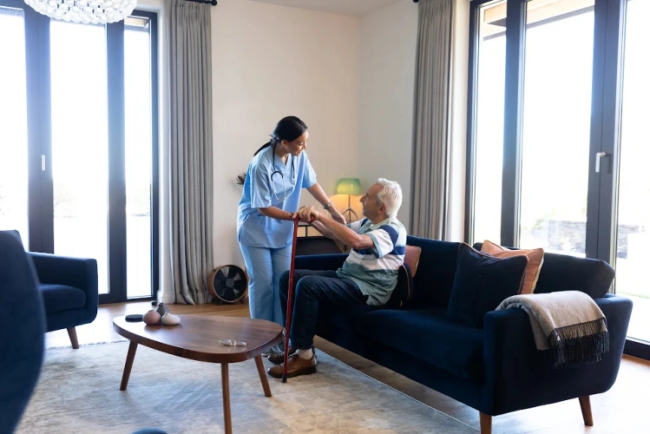
How Home Nursing Supports Cardiac Patients After Heart Surgery
Home nursing for cardiac patients in Bangalore — wound care, vital monitoring, medication support, and 24/7 nurse care for safer post-surgery recovery

Medical Disclaimer: This article is for informational purposes only and does not constitute medical or professional care advice. Consult a qualified healthcare professional or licensed home care agency before making any care decisions.
Introduction
Home nursing for cardiac patients in Bangalore fills a medically critical gap between hospital discharge and full recovery. Bangalore's major cardiac centres — Narayana Health City in Bommasandra, Manipal Hospital on Old Airport Road, Apollo Hospitals on Bannerghatta Road, and Fortis Hospital on Cunningham Road — discharge post-surgical patients within five to seven days of major cardiac procedures. What happens in the weeks after that discharge determines recovery quality, complication risk, and long-term functional outcome.
The conditions that most commonly bring patients to cardiac surgery are well-documented in India's health burden data. Cardiovascular disease is the leading cause of death in India, according to research published under the India State-Level Disease Burden Initiative — supported by the Indian Council of Medical Research (ICMR) and the Ministry of Health and Family Welfare. The resulting demand for structured post-surgical care — particularly among elderly patients and those with comorbid conditions like diabetes and hypertension — is significant and growing.
For families managing recovery at home without clinical support, the risks are real. Wound infections, medication errors, missed early warning signs of complications, and the physical and emotional burden on family caregivers are all predictable consequences of unstructured post-discharge care. Professional home nursing addresses each of these systematically.
This article explains what professional post heart surgery care at home in Bangalore involves, what conditions it monitors and manages, how it supports both patient and family, and what families should verify before engaging any cardiac home nursing provider.
Importance of Home Nursing for Cardiac Patients
Hospital discharge after cardiac surgery does not mark the end of the medically critical period — it marks the transition of that critical period to a less monitored environment. For patients recovering from coronary artery bypass grafting (CABG), valve replacement, or angioplasty, the weeks at home carry real clinical risk without structured supervision.
The Post-Discharge Risk Window
Post-cardiac surgery readmission within 30 days is a recognised quality indicator in cardiac care — tracked by hospitals and the
The specific risks in this period include surgical wound infection at the sternotomy or catheter site, fluid retention that strains the recovering heart, medication-related adverse events (particularly for patients on anticoagulants), arrhythmia that requires physician review, and complications from premature or unsupported mobilisation. Each of these is detectable before it becomes an emergency — if there is a trained person present to look for the signs.
5 Complications That Consistent Nursing Monitoring Prevents
1. Sternotomy wound infection: Surgical site infections in post-CABG patients are serious and preventable. A trained nurse assesses the wound at every visit for redness, swelling, discharge, and odour changes — the early signs that require immediate physician notification.
2. Fluid overload: Post-cardiac surgery patients are at risk of fluid retention. Daily weight monitoring and leg oedema assessment allow the nurse to detect fluid accumulation before it creates cardiac strain, giving the treating cardiologist time to adjust medication.
3. Anticoagulation complications: Patients on warfarin post-valve replacement require INR monitoring and careful compliance tracking. A missed dose, an extra dose, or a drug-food interaction that goes unnoticed can have serious consequences — ones that nursing supervision prevents.
4. Arrhythmia signs: Changes in pulse rate, rhythm, or the patient's subjective experience of palpitations are early warning signals. A nurse measuring and recording vitals twice daily will detect these changes; a family member without clinical training often will not.
5. Mobilisation injury: The graduated ambulation protocol after cardiac surgery is precise — too little movement creates deep vein thrombosis (DVT) risk, too much strains the healing sternum and cardiovascular system. A trained nurse guides safe mobilisation at the correct pace for each patient's recovery stage.
Role of Home Nurses in Post-Surgery Recovery
A home nurse providing cardiac home care services in Bangalore is not an attendant. The role requires clinical training in post-surgical care, familiarity with cardiac monitoring, and the professional competence to recognise and escalate warning signs. Nurses registered with the Indian Nursing Council (INC) or the Karnataka Nursing Council (KNC) carry the qualification baseline for this level of care.
4 Core Clinical Functions of a Cardiac Home Nurse
1. Vital sign monitoring and documentation: Blood pressure, pulse rate, oxygen saturation (SpO2), respiratory rate, and temperature are recorded at minimum twice daily. Readings outside the cardiologist-specified parameters — as documented in the discharge summary — trigger immediate escalation to the treating physician. Every reading is logged, creating a clinical record that supports physician follow-up decisions.
2. Surgical wound assessment and dressing: Sternotomy wounds and catheter or drain sites are assessed at each nursing visit for early infection indicators — redness, warmth, swelling, discharge, and odour. Dressing changes are performed using aseptic technique per the hospital's discharge instructions. Any change in wound appearance is documented and reported.
3. Oedema and fluid monitoring: The nurse conducts a daily weight measurement and lower limb assessment for swelling. An increase of more than 1–2 kg in 24 hours, or new or worsening oedema, is an early indicator of fluid retention that requires physician review before it becomes a cardiac emergency.
4. Medication schedule management: Cardiac surgery patients are typically discharged on five to eight medications simultaneously — each with specific timing, dosage, and food interaction requirements. The nurse confirms correct administration at each prescribed interval, maintains a written medication log, and monitors for side effects including dizziness from antihypertensives, bruising from anticoagulants, and fatigue from beta-blockers.
Mobility Support and Gradual Rehabilitation
Graduated mobilisation is a clinical requirement, not just a comfort measure, after cardiac surgery. The home nurse guides the patient through the prescribed walking progression — from bed to chair, then room-length walks, then progressively longer distances — at the pace defined by the treating team. This progression builds cardiovascular and musculoskeletal strength while protecting the healing sternum from excessive load.
Transfer training — moving safely from bed to chair, from sitting to standing, from chair to bathroom — is also a nursing responsibility. For elderly patients or those with additional conditions, falls during these transfers are a primary injury risk. Nursing supervision during early mobilisation prevents the accidents that would otherwise set recovery back by weeks
Medication and Diet Management at Home
Managing Complex Cardiac Medication Regimes at Home
Cardiac surgery patients are discharged on multiple medications simultaneously. The combination typically includes antiplatelet agents (aspirin, clopidogrel), beta-blockers, ACE inhibitors or ARBs, statins, and — for valve replacement patients — anticoagulants such as warfarin. Each has specific timing requirements, dosage instructions, and interaction profiles that require consistent, accurate management.
Three medication scenarios where home nursing prevents emergency readmission:
1. Warfarin and INR monitoring: Post-valve replacement patients on warfarin require regular INR (International Normalised Ratio) blood tests and dose adjustments based on results. The home nurse coordinates INR test scheduling, ensures the cardiologist receives results before the next dose decision, and monitors the patient for bleeding signs or thromboembolic symptoms between tests.
2. Beta-blocker timing compliance: Beta-blockers taken at the wrong time or missed can cause rebound tachycardia or blood pressure fluctuation. The nurse's medication log creates a record of exact administration times that the treating cardiologist reviews at follow-up appointments.
3. Drug-food interactions: Several cardiac medications have significant food interactions — warfarin and vitamin K-rich foods, statins and grapefruit, ACE inhibitors and potassium-rich foods. The nurse reinforces these interactions at each visit in the context of the patient's actual diet.
Cardiac-Friendly Diet Guidance in Indian Households
Standard cardiac diet principles — reduced sodium intake, limited saturated fats, adequate hydration without fluid overload for heart failure patients — are reinforced by the home nurse during daily interactions. The National Institute of Nutrition (NIN), an autonomous body under the Indian Council of Medical Research (ICMR), publishes dietary guidelines relevant to cardiovascular risk management in India, including recommendations on fat, sodium, and fibre intake applicable to post-cardiac surgery dietary management.
In Bangalore households where traditional South Indian cooking is high in salt, coconut oil, and refined carbohydrates, dietary adaptation after cardiac surgery is a practical challenge, not just a clinical instruction. The home nurse's guidance goes beyond reciting a diet sheet — it helps families adapt familiar recipes, identify high-sodium condiments and packaged foods, and understand portion management for patients also managing diabetes or hypertension alongside cardiac recovery.
Emotional Support and Comfort at Home
The psychological dimension of cardiac recovery is clinically significant and frequently underestimated in home care planning. Anxiety about physical capacity, fear of exertion, and low mood are common in the weeks following major heart surgery. These are not simply emotional responses to illness — they are documented clinical phenomena in cardiac surgery recovery, and they directly impair physical rehabilitation when left unaddressed.
Why the Home Environment Matters for Cardiac Recovery
Being treated at home — in a familiar room, in a recognisable bed, surrounded by family — creates the psychological safety that supports active engagement with recovery. Anxiety about care quality, disorientation from clinical environments, and the social isolation of hospital stays all slow rehabilitation. Home nursing after heart surgery in Bangalore places professional clinical care within the environment where the patient is most psychologically grounded.
The physiological relevance of this comfort is concrete: elevated stress hormones increase heart rate and blood pressure — two parameters that recovering cardiac patients must keep controlled. A patient who is relaxed, comfortable, and surrounded by family will maintain lower resting vitals than an equivalently medicated patient in a clinical setting. This is not a soft benefit. It is a measurable cardiac care advantage.
Family Involvement as a Clinical Asset
For family caregivers managing a recovering cardiac patient at home, the presence of a trained nurse reduces anxiety and increases competence simultaneously. The nurse teaches family members safe handling and transfer techniques, explains what vital sign changes to watch for between nursing visits, demonstrates medication administration, and models the calm, structured approach to care that prevents panic in difficult moments.
Families who understand the recovery process and know what to do in specific situations are not bystanders to the care — they are an extension of it. This knowledge reduces the family's caregiver burden even as it increases their practical contribution to the patient's recovery.
Why Bangalore Families Choose Home Nursing for Cardiac Recovery
The structural case for home nursing in Bangalore's cardiac care context is built on both clinical and practical factors. For stable post-surgical patients discharged from the city's major cardiac facilities, home nursing represents a medically appropriate and economically rational continuation of care.
|
Factor |
Extended Hospital Stay |
Home Nursing for Cardiac Recovery |
|
Recovery environment |
Clinical ward — shared, unfamiliar, high-stimulus |
Patient's own home — familiar, low-stress |
|
Family access |
Restricted visiting hours |
Continuous family presence permitted |
|
Nosocomial infection risk |
Higher — clinical environment exposure |
Lower — isolated home environment |
|
Nursing attention |
Periodic ward rounds; shared across multiple patients |
Dedicated one-to-one monitoring |
|
Estimated daily cost (Bangalore)* |
INR 8,000–25,000+ (private hospital, general to step-down) |
INR 2,000–8,000 (trained nursing, 8–24 hr shift) |
|
Psychological comfort |
Clinical setting; limited personal space |
Home environment reduces anxiety and stress |
|
Duration flexibility |
Hospital determines discharge timeline |
Adjusted to patient's recovery progress and family plan |
* Cost estimates are indicative market figures for Bangalore private hospitals and home nursing providers as of 2026. Verify current rates directly with the hospital and nursing agency before making decisions.
The nosocomial infection advantage in the table above deserves specific emphasis. Hospital-acquired infections — including surgical site infections — are a documented risk for patients who remain in clinical settings longer than medically necessary. Transitioning a stable cardiac patient to a clean home environment with trained nursing reduces this specific exposure while maintaining the clinical oversight that the recovery period requires.
5 Questions Families Should Ask Before Hiring a Cardiac Home Nurse in Bangalore
Before engaging any home nursing provider, families should have clear answers to these questions:
|
What to Verify |
What to Ask Before Hiring |
Red Flag |
|
Nurse registration credentials |
Is the nurse registered with the Indian Nursing Council (INC) or Karnataka Nursing Council (KNC)? |
Credentials not provided when requested |
|
Cardiac care experience |
What is the nurse's experience with post-cardiac surgery patients specifically? |
Only general nursing background stated — no cardiac-specific experience |
|
Clinical handover documentation |
Does the agency conduct a formal clinical handover from the discharging hospital? |
No structured handover process — care starts without patient history review |
|
Vital monitoring protocol |
How frequently are vitals recorded? What parameters — BP, pulse, SpO2, temperature? |
No documented monitoring frequency or escalation threshold |
|
Emergency escalation protocol |
What happens if the patient's condition changes acutely at 2 AM? |
No documented emergency protocol — verbal reassurance only |
|
Family communication |
How and how often is progress reported to family members? |
No structured family reporting — informal updates only |
Use this checklist during your initial conversation with any nursing agency. A credible provider answers all six questions specifically and in writing — not with verbal reassurances.
Aayan Global provides trained, INC and KNC-registered
→ Learn about Aayan Global's team and clinical standards
Conclusion
The weeks following cardiac surgery are medically critical and emotionally demanding for both patients and families. For families in Bangalore managing this period at home, professional cardiac home care services — provided by INC or KNC-registered nurses with post-surgical experience — offer structured monitoring, medication oversight, wound care, dietary guidance, and the daily clinical presence needed to detect complications before they require emergency intervention.
Home nursing does not replace the treating cardiologist. It extends their discharge instructions into the patient's daily life, consistently and accurately, in the environment where recovery actually happens. The clinical outcome depends on three aligned elements: the right nursing provider, clear communication between the nurse and the treating cardiologist, and a family that understands and supports the recovery process.
Before engaging any home nursing provider, verify nurse credentials through the Indian Nursing Council (INC) registration portal at nursing.nic.in or the Karnataka Nursing Council. Confirm the emergency escalation protocol in writing. And obtain written sign-off from the treating cardiologist that home-based care is appropriate for the patient's specific condition and recovery stage.
Cardiac Home Nursing Care in Bangalore
Looking for professional home nursing for cardiac patients in Bangalore? Aayan Global provides trained, INC-registered home nurses for post-heart surgery recovery — covering vital monitoring, wound care, medication management, and family support. Speak with a care coordinator to arrange care for your loved one.
→ Enquire about cardiac home nursing care — talk to an Aayan Global care coordinator
→ Home nursing services overview — Aayan Global Bangalore
Frequently Asked Questions
Q1: What does a home nurse do for a cardiac patient after surgery?
A home nurse for cardiac patients monitors vital signs (blood pressure, pulse, oxygen saturation, temperature), assesses and dresses surgical wounds, tracks medication schedules, monitors for early warning signs of complications including fluid retention and irregular heartbeat, and supports graduated mobility under clinical guidance. The scope of care follows the treating cardiologist's discharge instructions — the home nurse does not make independent clinical decisions.
Q2: How long is home nursing required after heart surgery in Bangalore?
Duration depends on the surgery type and recovery progress. After CABG or valve replacement, home nursing support is commonly needed for four to eight weeks. Patients with additional conditions such as diabetes or hypertension may need longer care. The treating cardiologist determines the appropriate duration based on clinical review — not a fixed calendar timeline. Always follow the prescribed discharge plan rather than a general estimate.
Q3: What should families verify when choosing cardiac home care services in Bangalore?
Verify that the agency employs nurses registered with the Indian Nursing Council (INC) or Karnataka Nursing Council (KNC). Confirm the nurse's specific cardiac care experience. Ask about vital monitoring protocol, medication management process, wound care capability, clinical handover from the discharging hospital, and emergency escalation procedure. A credible provider answers all of these specifically and in writing.
Q4: Is home nursing safe for patients after bypass surgery?
Home nursing for CABG recovery is clinically appropriate for patients who have been medically cleared for discharge and whose condition is stable. The cardiologist's discharge summary defines the monitoring and care requirements. A trained home nurse follows these instructions and escalates concerning vital changes to the treating physician. Home nursing is not a substitute for emergency care — families must maintain a documented emergency protocol and route to the nearest cardiac facility.
Q5: What is the approximate cost of home nursing for cardiac patients in Bangalore?
Home nursing costs in Bangalore vary based on shift duration (8-hour or 24-hour) and clinical skill level required. General estimates range from INR 2,000 to INR 8,000 per day for trained nursing care — verify current rates directly with the provider. Compared to private hospital ward or step-down ICU costs of INR 8,000–25,000+ per day in Bangalore, home nursing represents significant cost reduction for stable recovering patients. All figures are indicative market estimates as of 2026.
About the Author
|
L K Monu Borkala Chief Strategist, OneCity Technologies, Bangalore L K Monu Borkala is a digital marketing strategist with 20+ years of experience producing informational content across healthcare services, home care, and professional services verticals. He oversees SEO content strategy and editorial compliance for 650+ clients across India and UAE through OneCity Technologies, Bangalore. This article is produced for informational purposes only. Consult a licensed healthcare provider or registered home care agency before making decisions about home nursing or care arrangements. LinkedIn: https://www.linkedin.com/in/monuborkala/ |
What's Your Reaction?