What to Expect During Your First Home Care Service Visit
What happens during your first home care visit in Bangalore — assessment, care planning, caregiver introduction, and how to prepare beforehand.

|
Important Disclaimer This article is for informational purposes only and does not constitute medical or professional care advice. Consult a qualified healthcare professional or licensed home care agency before making any care decisions. |
The decision to bring a professional caregiver into your home is significant — and the first visit sets the tone for everything that follows. For families in Bangalore arranging home care services in Bangalore for an elderly parent, a recovering patient, or a family member with a chronic condition, the initial visit is not simply a formality. It is the foundation on which the entire care arrangement is built.
Professional home care services in Bangalore — from providers like Aayan Global — approach the first visit as a structured process: assessment, planning, and relationship-building, conducted with the patient's comfort and dignity as the primary concern. Understanding what this visit involves helps families prepare effectively, ask the right questions, and feel confident about the care arrangement from day one.
Understanding the Purpose of the First Home Care Visit
The first home care visit has three distinct purposes that are often conflated but are each important in their own right: introduction, assessment, and goal-setting. A well-structured first visit addresses all three.
Introduction Between Caregiver, Patient, and Family
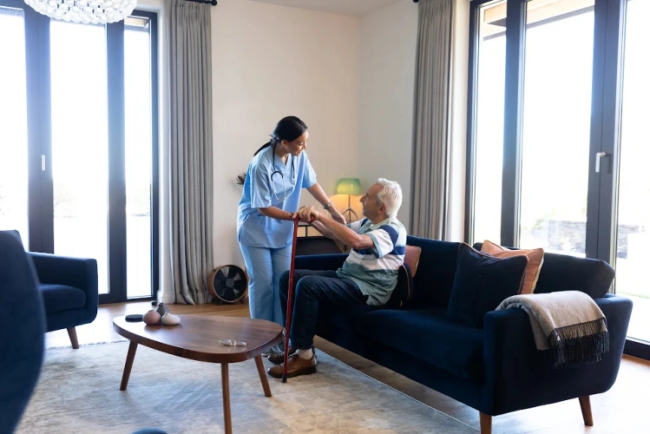
Before any clinical assessment begins, the first visit is an opportunity for the patient and family to meet the assigned caregiver — to understand their background, ask direct questions, and begin the relationship that will define the care experience. For elderly patients particularly, the comfort and confidence they feel with their caregiver is a direct predictor of how well the care arrangement works.
Aayan Global assigns caregivers based on the patient's specific care needs, the family's preferences (gender, language, experience with particular conditions), and the caregiver's documented training. Families are encouraged to ask the caregiver directly about their experience and approach during the introduction — this is not presumptuous; it is responsible.
Assessment of Health Conditions and Daily Care Needs
The clinical and functional assessment conducted during the first visit determines the scope and structure of the care plan. This includes reviewing current health conditions, medications, mobility status, nutrition, and hygiene requirements — and identifying any immediate safety concerns within the home environment.
Goal-Setting for Ongoing Support
The assessment findings inform a set of care goals that are agreed between the agency, the family, and — where the patient is cognitively able — the patient themselves. These goals are the measure against which care quality is evaluated over time: Has the patient's mobility improved? Are medications being taken consistently? Are hygiene standards maintained? Is the patient's emotional state improving or declining?
Comprehensive Health and Lifestyle Assessment
A thorough assessment during the first visit is what separates professional home care services from informal caregiving. Aayan Global's nursing team conducts a structured assessment covering the following domains:
Medical History and Medication Review
|
Assessment Area |
What the Caregiver Reviews |
Why It Matters |
|
Current diagnoses |
All active medical conditions — diabetes, hypertension, cardiac conditions, post-surgical status, neurological conditions |
Determines what monitoring is needed and which symptoms require immediate escalation |
|
Medication schedule |
Complete list of medications, dosage, timing, and prescribing physician |
Prevents missed doses, duplicate administration, and dangerous drug interactions |
|
Recent hospitalisations |
Discharge summary, treatment received, post-discharge instructions |
Identifies recovery requirements and restrictions that must be followed at home |
|
Allergy profile |
Medication and food allergies |
Prevents allergic incidents during care |
|
Treating physician |
Name and contact of the patient's family doctor and relevant specialists |
Enables prompt escalation when the patient's condition changes |
Mobility, Nutrition, and Personal Care Assessment
• Mobility status: Can the patient walk independently? Do they require a walking frame, wheelchair, or full transfer support? Has there been a recent fall?
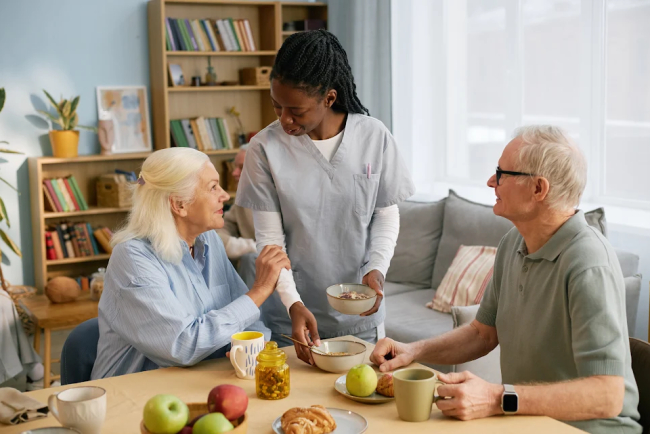
• Nutritional assessment: Current dietary restrictions (low-sodium, diabetic diet, soft foods), typical meal schedule, appetite patterns, and hydration habits
• Personal care capacity: Which personal care tasks can the patient manage independently, which require assistance, and which require full caregiver support? This determines the level of care required
• Continence status: Urinary or bowel continence management needs — addressed with complete sensitivity and privacy
Home Safety Assessment
The caregiver or nurse conducting the first visit will observe the home environment for safety risks — not to criticise the family, but to identify modifications that reduce the risk of falls and accidents:
• Loose rugs, uneven flooring, or clutter in high-traffic pathways
• Bathroom safety — presence of non-slip mats, grab rails, adequate lighting
• Bedroom setup — bed height, access to frequently needed items, night lighting
• Medication storage — accessible, organised, and safely stored away from confusion-prone situations
• Emergency access — whether the patient can reach a phone or alert device independently
Creating a Personalised Care Plan
Personalised home care in Bangalore means that the care plan written after the first visit is specific to this patient's conditions, preferences, living environment, and family context — not a template applied uniformly across patients with similar diagnoses.
• Service scope: Which specific tasks will the caregiver perform — personal hygiene, medication reminders, mobility assistance, wound care (if a qualified nurse), meal preparation, companionship, household tasks
• Daily schedule: Shift hours, specific care timing windows (morning hygiene, meal times, medication schedule, exercise), and handover procedure with family members
• Escalation protocol: What observations or events trigger an immediate call to the family? What triggers a call to the treating physician? What triggers calling emergency services? These protocols must be explicit
• Family involvement: Who in the family receives daily updates? How are updates communicated — phone call, WhatsApp message, written daily log? Family communication is a care plan component, not an afterthought
• Review schedule: When will the care plan be formally reviewed — typically within the first two weeks, then monthly. Care needs change; the plan must change with them
Meeting Your Caregiver and Building Trust
The patient-caregiver relationship is the most important variable in home care quality — more important than the care plan itself. A patient who trusts and feels comfortable with their caregiver cooperates more fully with all aspects of their care, communicates symptoms and concerns more readily, and reports higher satisfaction with their daily experience.
• Caregiver qualifications: Ask specifically what training and experience the assigned caregiver has with your family member's specific condition. For clinical care, ask for INC registration confirmation. Aayan Global provides background-verified, trained caregivers — families can and should verify this
• Communication expectations: Establish from day one how the caregiver will report to the family — what will be shared daily, what warrants an immediate call, and how the family should reach the caregiver during shift hours
• Patient preferences: Share the patient's preferences, daily habits, likes and dislikes with the caregiver during the first visit. A caregiver who knows the patient's preferred meal times, their television habits, and the topics they enjoy discussing provides care that feels personal, not institutional
• Language and cultural compatibility: In Bangalore's diverse household context, language compatibility between the caregiver and patient matters. Aayan Global matches caregivers to patient language preferences where possible — Kannada, Telugu, Malayalam, Tamil, or English
Preparing Your Home for the First Care Visit
Families who prepare well for the first visit make the assessment more accurate and the care plan more complete. The following items help the visiting caregiver or nurse conduct a thorough assessment from the start:
|
Prepare This |
Details to Have Ready |
Why the Caregiver Needs It |
|
Medical records |
Discharge summary (if recent hospitalisation), current prescriptions, investigation reports |
Prevents re-assessment delays; ensures care plan reflects actual clinical status |
|
Medication list |
All medications with dosage, timing, and prescribing doctor — including supplements |
Enables accurate medication schedule; prevents missed or duplicated doses |
|
Emergency contacts |
Treating physician's number, nearest relative's number, preferred hospital for emergencies |
First visit escalation protocol requires this information upfront |
|
Health history summary |
Key diagnoses, past surgeries, known allergies, previous care arrangements |
Enables caregiver to understand baseline health status quickly |
|
Daily routine notes |
The patient's typical wake time, meal preferences, sleep pattern, and preferred activities |
Enables caregiver to slot care tasks into the patient's existing rhythm rather than disrupting it |
|
Home layout orientation |
Show the caregiver where medications are stored, where the bathroom is, where emergency items are located |
Safety and efficiency — the caregiver should not be searching for essentials during care |
Common Questions Families Ask During the First Visit
These are the questions Aayan Global's care coordinators most consistently hear from families during initial home care visits in Bangalore — and the answers families should expect from a professional provider:
|
Family Question |
What a Professional Provider Should Answer |
|
What hours will the caregiver be present? |
Shift hours agreed in the care plan — typically 8-hour, 12-hour, or 24-hour live-in. Overtime and schedule changes communicated in advance |
|
What happens in an emergency? |
Explicit escalation protocol: family first, then physician, then emergency services (112). The caregiver should know this protocol before the first shift starts |
|
How will we know if our parent's condition changes? |
Daily care log and verbal or WhatsApp update to the named family contact. Significant changes escalated immediately, not saved for the end-of-shift report |
|
Can we adjust the care plan if needs change? |
Yes — care plans are reviewed regularly and adjusted as needs evolve. Schedule a formal review within the first two weeks |
|
What if we are not happy with the assigned caregiver? |
A professional agency has a documented replacement procedure — the family should ask about this upfront and receive a clear answer, not a vague assurance |
|
Is the caregiver's background verified? |
Aayan Global provides Aadhaar-verified, background-checked caregivers. Ask for written confirmation of verification status before care begins |
Benefits of Professional Home Care Services in Bangalore
Choosing professional in-home care services in Bangalore over informal arrangements or institutional care delivers measurable benefits across multiple dimensions:
|
Benefit |
What It Means in Practice |
|
Personalised one-on-one attention |
The caregiver's focus is entirely on one patient — not shared across a ward or residential facility |
|
Care in the familiar home environment |
Patients in familiar surroundings recover faster, maintain cognitive function better, and report higher well-being than those in institutional settings |
|
Improved patient independence |
Professional caregivers support what the patient cannot do safely — not what they can. Preserving function preserves dignity |
|
Reduced family caregiver burden |
Working family members can fulfil professional responsibilities with confidence that the patient is monitored and supported |
|
Consistent health monitoring |
Daily observation by a trained caregiver identifies health changes before they become emergencies |
|
Medication adherence |
Structured medication reminders from a consistent caregiver significantly improve adherence in patients with complex schedules |
|
Peace of mind for outstation families |
Families based in other cities can maintain daily connection to their parent's care through the care coordinator and caregiver update system |
Conclusion
The first home care visit is a structured, purposeful process — not a routine formality. It involves a clinical and functional assessment of the patient, a safety evaluation of the home environment, the development of a personalised care plan, and the beginning of the caregiver relationship that will define the quality of care the patient receives.
Families choosing home care services in Bangalore from a professional, structured provider are making a decision with significant consequences for their family member's health, safety, and daily experience. Understanding what the first visit involves — and preparing for it well — is the most productive thing a family can do before care begins.
|
Disclaimer: The information in this article is for general guidance only. Home care requirements vary significantly by individual health condition. Always consult a qualified healthcare professional or registered home care agency before establishing any care arrangement. |
|
Looking for Reliable Home Care Services in Bangalore? Aayan Global provides compassionate, professional home care in Bangalore, Mangalore, and Udupi — trained, background-verified caregivers and INC-registered nurses for elderly care, patient recovery, and personalised home nursing. Contact us today to schedule a home assessment. ???? Mangalore: +91 73495 13467 / +91 96119 12556 ???? Bangalore: +91 81472 97666 |
Frequently Asked Questions
How long does the first home care visit usually take?
The first home care visit from Aayan Global typically takes 45–90 minutes, depending on the complexity of the patient's medical history and care needs. This includes the caregiver or nurse introduction, the health and functional assessment, the home safety walkthrough, and the initial care plan discussion with the family. Families should allow adequate time for this visit — it is the most important single interaction in the care arrangement.
Do I need to be present for the first home care visit?
At least one adult family member who is familiar with the patient's medical history and current health status should be present for the first visit. This person should be able to answer questions about medications, recent hospitalisations, the patient's daily routine, and family emergency contacts. If the primary family contact cannot be present in person, a video call participation can be arranged — but in-person presence produces a more accurate and complete assessment.
What if my family member is nervous about having a caregiver at home?
Elderly patients and recovering patients often have concerns about loss of privacy or independence when a caregiver enters their home. Aayan Global's approach to the first visit is designed to address this: the visit is introduced as an assessment, not an immediate start of care, giving the patient time to meet the caregiver before care formally begins. Families can help by framing the caregiver's role as support rather than supervision, and by involving the patient in decisions about the care plan.
Can I request a specific type of caregiver for the first visit?
Families can specify preferences for the caregiver's gender, language, and relevant experience when making an initial enquiry. Aayan Global considers these preferences in caregiver matching — particularly for personal care arrangements where the patient's comfort with the caregiver's gender is clinically significant. Stating these preferences upfront ensures the right caregiver is assigned from day one.
What happens if the care needs are more complex than initially described?
Patient care services at home in Bangalore sometimes reveal more complex needs than the initial family description suggested — this is normal and not a problem. If the assessment identifies clinical needs that require a qualified nurse rather than a care attendant, or a higher level of care frequency, Aayan Global's coordinator discusses this with the family following the assessment and adjusts the care plan and staffing accordingly. The assessment exists precisely to identify this — families are not held to the initial description if the clinical reality is different.
|
Disclaimer (FAQ): The answers above are for informational purposes only. Individual care needs vary significantly by health condition and must be assessed by a qualified healthcare professional. Consult a licensed home care agency or your family physician before making care arrangement decisions. |
|
Written by L K Monu Borkala Chief Strategist, OneCity Technologies L K Monu Borkala is a digital marketing strategist with 20+ years of experience producing informational content across healthcare services, home care, and professional services verticals. This article is produced for informational purposes only. Consult a licensed healthcare provider or registered home care agency before making decisions about home nursing or care arrangements. LinkedIn: https://www.linkedin.com/in/monuborkala/ |
What's Your Reaction?