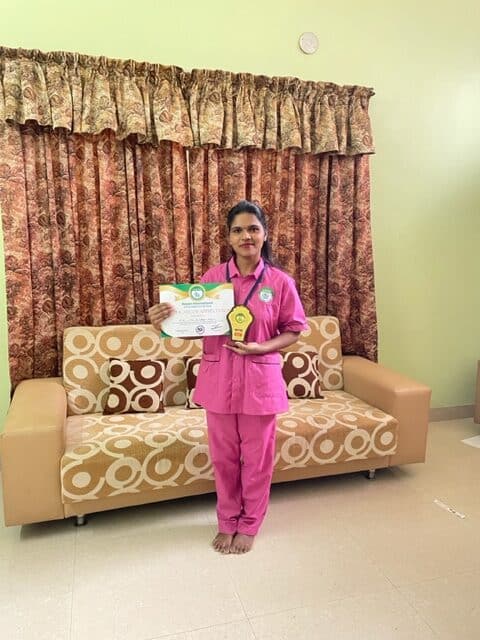
Elderly care at home in Mangalore provides daily living support, medication management, mobility assistance, and companionship so seniors can age safely in familiar surroundings. Our team coordinates with the senior's treating doctor to ensure ongoing health conditions are monitored and medication schedules are followed without gaps.
For elderly care in Bangalore, see our elderly care services in Bangalore page.
What Elderly Care at Home Covers
Elderly care at home is not a single service but a combination of support tailored to what the senior actually needs. Some families need a caretaker for daily living tasks because the senior can no longer manage bathing, dressing, or meals independently. Others need a nurse because the senior has diabetes, hypertension, or another condition that requires regular monitoring and medication management alongside daily care.
The care plan is built around a home assessment, not a fixed package. A coordinator visits the senior's home, evaluates their mobility, cognitive state, existing medical conditions, and the family's schedule, and recommends the right level of support. This avoids both under-staffing (a caretaker assigned to a case that needs nursing skill) and over-staffing (a BSc nurse deployed for a senior who needs companionship and meal support).
Daily Living Support
Daily living support covers the activities that become difficult or unsafe for a senior to manage alone. Our caretakers assist with bathing and personal hygiene, dressing, toileting, oral care, hair care, and skin care. For seniors who are mobile but unsteady, the caretaker provides supervised walking, helps with transfers between bed and chair, and stays nearby during bathroom use to prevent falls.
Meal preparation and feeding assistance follow the dietary guidelines from the treating doctor or nutritionist. The caretaker prepares meals, monitors fluid intake, and ensures the senior eats at regular intervals rather than skipping meals. For seniors with swallowing difficulty, the caretaker adjusts food texture and monitors for choking, escalating to the treating doctor if swallowing worsens.
Housekeeping around the patient includes changing bed linen, keeping the immediate living area clean, and managing laundry related to the senior's personal care. This is not a full housekeeping service but ensures the senior's environment stays hygienic and clutter-free to reduce fall risk.
Get Free Home Assessment
Book Now
Medication Management
Many seniors take multiple medications for conditions such as diabetes, hypertension, thyroid disorders, and heart disease. Missing doses, doubling up, or taking medication at the wrong time can cause serious problems, particularly with blood thinners and insulin. Our caretakers and nurses manage medication schedules to ensure every dose is given at the right time, in the right amount, and with the right conditions (before or after food, with water, and so on).
For seniors on insulin, the nurse monitors blood sugar levels at prescribed intervals, administers injections, and maintains a log the treating doctor can review. For seniors on blood pressure medication, vitals are recorded daily so the doctor can adjust dosing based on actual readings rather than occasional clinic visits.
The medication log is shared with the family and the treating doctor. Any missed dose, adverse reaction, or change in the senior's response to medication is reported to the doctor promptly rather than waiting for the next scheduled appointment.
Mobility Support and Fall Prevention
Falls are the main cause of injury in seniors, and most happen at home. Our caretakers assess the home environment for common hazards such as loose rugs, wet bathroom floors, poor lighting, and furniture placement that blocks walking paths, and work with the family to address them.
For seniors who use a walker or wheelchair, the caretaker assists with transfers, ensures the device is within reach, and supervises movement around the house. For seniors recovering from a fracture or joint replacement, the caretaker follows the physiotherapist's exercise plan between sessions, encouraging prescribed movements without pushing beyond what is safe.
Night-time falls are a particular risk for seniors who get up to use the bathroom. A night-shift caretaker or a 24-hour rotation ensures someone is awake and available to assist during these hours, reducing the risk of an unwitnessed fall.
Companionship and Mental Wellbeing
Loneliness and isolation affect many seniors, particularly those who live alone or whose family members are at work during the day. A caretaker who is present through the day provides conversation, company during meals, and engagement in activities the senior enjoys, whether that is reading, watching television, playing cards, or simply talking.
Routine matters for mental wellbeing. Waking at a consistent time, having meals on schedule, bathing and dressing each morning, and spending time outdoors (a short walk, sitting in the balcony) all contribute to a sense of normalcy. Our caretakers help maintain this structure, which is particularly important for seniors showing early signs of memory loss or confusion.
For seniors with depression or anxiety, our nurses watch for changes in mood, appetite, sleep, and social engagement, and report concerning patterns to the treating doctor. The caretaker's presence itself often reduces anxiety, since the senior knows help is available if they feel unwell.
Chronic Condition Monitoring
Many seniors live with one or more chronic conditions that require ongoing monitoring. Our nurses track vitals, administer prescribed medication, and maintain records that the treating doctor uses to adjust treatment:
Diabetes: Blood sugar monitoring at prescribed intervals, insulin administration, foot care to prevent diabetic ulcers, and dietary monitoring. The nurse records readings in a log and alerts the doctor if levels fall outside the target range.
Hypertension: Blood pressure monitoring twice daily or as prescribed, medication administration, and tracking of symptoms such as headache, dizziness, or chest discomfort that could indicate a medication adjustment is needed.
Heart disease: Daily weight tracking for fluid retention, monitoring for swelling in the legs and ankles, oxygen saturation checks, and medication adherence for blood thinners, diuretics, and heart-rate-controlling drugs.
Arthritis and joint conditions: Assistance with prescribed exercises, pain management, monitoring for flare-ups, and help with mobility during periods of increased stiffness or swelling.
COPD and respiratory conditions: Oxygen therapy as prescribed, monitoring of breathing patterns, nebuliser use, and escalation if breathing difficulty increases beyond the baseline.
Dementia and Memory Care
Caring for a senior with dementia or Alzheimer's disease requires patience, training, and a structured approach. Memory loss, confusion, agitation, wandering, and sundowning (increased confusion in the evening) are common, and each needs specific handling rather than a generic caregiving approach.
Our caretakers maintain a consistent daily routine because predictability reduces confusion and anxiety. They use gentle redirection when the senior becomes agitated or fixated on a task, rather than confrontation or correction. Wandering is managed through environmental safety measures, door awareness, and keeping the senior engaged in activities during high-risk periods.
For advanced dementia where the senior can no longer communicate needs clearly, our nurses monitor for signs of pain, infection, dehydration, and constipation that the senior cannot report verbally. Changes in behaviour, appetite, or sleep pattern are documented and reported to the treating doctor, since these often signal an underlying physical problem in a patient who cannot describe symptoms.
Qualification Tiers for Elderly Care
The right qualification depends on the senior's medical needs, not just daily care requirements. Here is how the tiers apply to elderly care:
| Qualification |
Can Do |
Right For |
| Caretaker |
Bathing, dressing, feeding, toileting, medication reminders, companionship, supervised walking, basic vital signs, light housekeeping around the patient |
Seniors who need daily living support with stable or no medical conditions |
| GNM Nurse |
Everything a caretaker does, plus insulin injection, catheter care, wound dressing, IV line management, oxygen therapy, structured vital sign monitoring with documentation |
Seniors with diabetes on insulin, catheter dependence, chronic wounds, or multiple medications needing clinical oversight |
| BSc Nurse |
Everything a GNM does, plus ventilator monitoring, tracheostomy care, complex medication regimen management, and close coordination with specialists |
Seniors with multiple coexisting conditions requiring degree-level clinical judgment, or cases where the treating doctor requests a degree-qualified nurse |
Our coordinator recommends the tier after the free home assessment, based on the senior's medical conditions, mobility, cognitive state, and the treating doctor's notes. See our detailed comparison: Caretaker vs Nurse – Qualification, Cost & When You Need Which.
Equipment for Elderly Care at Home
The right equipment reduces fall risk, improves comfort, and makes caregiving safer for both the senior and the caretaker:
| Equipment | Why It Is Needed |
|---|
| Hospital bed with side rails | Adjustable positioning for seniors who spend extended time in bed. Side rails prevent falls during sleep or when the senior sits up without assistance. |
| Air mattress (alternating pressure) | Reduces pressure sore risk for seniors with limited mobility who spend most of the day in bed. |
| Wheelchair | For seniors who cannot walk safely even with support, allowing movement within and outside the home. |
| Walker or rollator | Provides stability for seniors who can walk but need support to prevent falls, particularly after a fracture or joint replacement. |
We coordinate equipment rental, delivery, and setup. See our full equipment list: Home Care Medical Equipment.
Elderly Care Pricing – Mangalore
Equipment rental is quoted separately based on the senior's needs.
These are starting prices for nursing and caretaker care in Mangalore. The final rate depends on the patient's condition, the care needed and the hours required.
| Care setting | Starting price |
|---|
| Care at home | ₹900 – ₹1,200 per day (24 hours) |
| Care in hospital | ₹1,300 – ₹1,700 per day (24 hours) |
| Monthly care | From ₹28,000 onwards |
The coordinator confirms the exact figure in writing after the free home assessment. See the home nurse cost page for how the rate is set.
Most elderly care cases are managed by a caretaker or GNM nurse. BSc nurses are deployed for complex multi-condition cases. Call +91 96631 01975 for a personalised quote based on the senior's condition.
For a comparison of home care versus assisted living or hospital stays, see: Home Nursing vs Hospital Care – Cost, Safety & Recovery Compared.
Coordinating with Mangalore Hospitals
Many elderly care cases begin after a hospital discharge – a fall that led to a fracture, a cardiac event, a worsening of a chronic condition, or a planned surgery after which the senior needs supervised recovery. Our caretakers and nurses follow the hospital discharge care plan and maintain a daily log the treating doctor can review at follow-up visits.
KMC Hospital Mangalore: KMC's geriatric medicine, orthopaedics, and general medicine departments manage a significant share of elderly patients across Dakshina Kannada. Our nurses follow KMC's discharge protocols and maintain medication and vitals logs the treating team can review.
AJ Hospital: AJ Hospital's orthopaedic and general medicine departments frequently refer patients for home-based recovery care after hip or knee surgery. Our caretakers coordinate with the discharging team on mobility restrictions and physiotherapy timelines.
Father Muller Medical College Hospital: Father Muller manages chronic conditions and post-surgical recovery for a large elderly patient base. Our nurses continue the prescribed medication regimen and report vital sign trends back to the treating team.
Yenepoya Medical College Hospital: Yenepoya's internal medicine and cardiology teams manage complex elderly cases with multiple coexisting conditions. Our GNM and BSc nurses are experienced with the documentation and escalation protocols these teams expect.
How coordination works day to day: The caretaker or nurse records vitals, medication given, food intake, mobility, and any changes in the senior's condition every shift. This log is shared with the treating doctor between visits. If the senior's condition changes suddenly – a fall, confusion, chest pain, or unresponsive episode – the nurse contacts the doctor immediately and arranges hospital transfer if directed.
Mangalore Areas We Cover
We provide elderly care at home across Mangalore. Our Attavar branch coordinates caretaker and nurse deployment across the city and surrounding areas:
Central and city areas: Attavar, Falnir, Kadri, Bejai, Kankanady, Bunder, Mangaladevi.
Northern and coastal areas: Kottara, Bendoorwell, Surathkal, Bikarnakatte.
Southern and outer areas: Konchady, Derebail, and surrounding neighbourhoods. For locations beyond our usual coverage radius, we confirm caretaker or nurse availability before booking.
If a family member needs help arranging elderly care after a hospital discharge, call us before discharge so we can coordinate the transition: +91 96631 01975.
Frequently Asked Questions
What does elderly care at home include in Mangalore?
Elderly care at home includes daily living assistance (bathing, dressing, feeding, toileting), medication management and reminders, vital sign monitoring, mobility support and fall prevention, companionship, light housekeeping around the patient, and coordination with the treating doctor on ongoing health conditions.
How much does elderly care at home cost in Mangalore?
Care at home in Mangalore starts from ₹900 to ₹1,200 per day (24 hours) and care in hospital from ₹1,300 to ₹1,700 per day. Monthly care starts from ₹28,000 onwards. The final rate depends on the patient's condition, and the coordinator confirms it in writing after the free home assessment.
What qualifications do your elderly care nurses hold?
Our staff range from trained caretakers for daily living support, to GNM nurses who handle chronic condition monitoring and medical procedures, to BSc nurses for complex multi-condition cases. The right qualification is recommended during a free home assessment.
Can your caretakers handle dementia or Alzheimer's patients?
Yes. Our caretakers are trained to manage memory loss, confusion, wandering, and sundowning through consistent routines, gentle redirection, and safety measures. For advanced dementia requiring 24-hour supervision, we deploy a two-person rotation.
How quickly can elderly care be arranged in Mangalore?
Within 24 to 48 hours after the home assessment. Urgent cases such as a hospital discharge or sudden decline are prioritised for same-day placement.
Do you provide both short-term and long-term care?
Yes. Short-term care covers post-hospital recovery or temporary family absence. Long-term care covers ongoing daily support. There is no minimum commitment period.
How do I book elderly care at home in Mangalore?
Call +91 96631 01975 or submit the enquiry form below. A coordinator arranges a free home assessment and recommends the appropriate caretaker or nurse qualification. Care begins within 24 to 48 hours of the assessment.